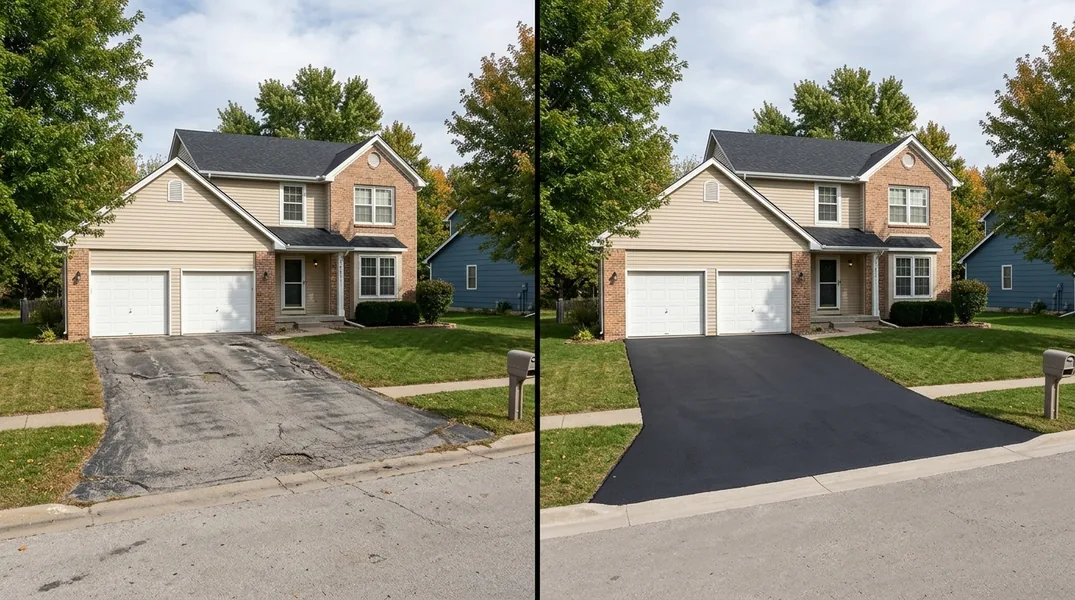
Why University of Nebraska Neighborhoods Have Drainage Challenges
The neighborhoods surrounding the University of Nebraska campus in Lincoln present a unique set of paving challenges that many homeowners don't anticipate until water damage becomes visible. Many of these residential areas were developed decades ago, meaning the original driveways were installed on aging or poorly compacted bases. Over time, soil settles unevenly, creating low spots where water naturally collects. Combined with Lincoln's seasonal freeze-thaw cycles and occasional heavy rainfall, these drainage problems escalate quickly.
Short driveways in these older neighborhoods are particularly vulnerable because they often lack the slope and base preparation that modern paving standards require. When a driveway is only 20 to 40 feet long, even a slight deviation in grade can trap water. The underlying soil base, installed perhaps 30 or 40 years ago, has likely compacted unevenly or eroded in places, leaving the asphalt surface unsupported. This combination of short length, poor base conditions, and inadequate slope creates the perfect environment for water pooling on driveways, which leads to accelerated deterioration and structural damage beneath the surface.
Understanding Water Pooling: The Hidden Cost of Neglect
Water pooling on driveways might seem like a minor cosmetic issue, but it's actually one of the most destructive problems a homeowner can ignore. When water sits on asphalt instead of draining away, it penetrates the surface through microscopic cracks and seeps down to the base layer. In cold weather, this trapped water freezes and expands, creating pressure that breaks apart the asphalt from underneath. This cycle repeats every winter, causing potholes, cracking, and eventually complete failure of sections of your driveway. What started as a small puddle can cost thousands of dollars in repairs if left unaddressed.
The problem is compounded in university neighborhoods where many properties have been rented or owned by transient residents. Deferred maintenance is common, meaning drainage issues may have gone unaddressed for years. By the time a new homeowner takes over, the damage runs deep. The good news is that modern Driveway Repair and drainage solutions can address these problems before they require complete replacement. Identifying water pooling early and taking action is the key to protecting your investment.
Driveway Drainage Solutions: French Drains and Trench Drains Explained
Professional Asphalt Driveway Paving & Installation companies offer two primary drainage solutions for properties struggling with water accumulation: french drains and trench drains. A driveway french drain is a subsurface system that redirects water away from the problem area. This involves installing a perforated pipe beneath or alongside the driveway, surrounded by gravel and landscape fabric. The pipe collects water and channels it to a lower elevation or catch basin, preventing it from pooling on the surface. French drains are ideal for driveways where the water problem is localized to one or two specific spots, or where the surrounding landscape allows for water to be directed downhill.
A trench drain driveway system, by contrast, is a more visible but highly effective solution that sits at or near the surface. These are typically installed along the edge of the driveway or across problem areas, featuring a linear grate or channel that captures water and directs it away. Trench drains work particularly well for short driveways in university neighborhoods because they can be customized to fit the specific dimensions and slope of your property. They're also easier to maintain and less invasive to install than subsurface french drains. Both systems can be integrated seamlessly into Asphalt Resurfacing & Overlay projects, allowing you to address drainage while refreshing your driveway's appearance and functionality.
Assessing Your Driveway: When to Call a Professional
If you own a home near the University of Nebraska campus or in one of Lincoln's older residential neighborhoods, a professional assessment is the first step toward solving drainage problems. During a site visit, an experienced contractor can identify the root causes of water pooling by examining the driveway's slope, the condition of the base layer, and the surrounding landscape. They'll look for signs of settled soil, cracks that allow water infiltration, and areas where the surface has sunk below its original grade. This evaluation determines whether you need a simple solution like improved surface grading or a more comprehensive approach involving base repair and drainage installation.
A professional assessment also reveals whether your existing driveway can be salvaged with targeted repairs or whether Asphalt Resurfacing & Overlay is necessary. In many cases, homeowners in university neighborhoods find that a combination of base repair, proper drainage installation, and new asphalt overlay solves the problem permanently. The contractor can also explain your options, timelines, and what to expect during the installation process. Lincoln Asphalt Paving offers a free estimate so you can understand the scope and pricing before making any commitments.
The Installation Process: What to Expect
Once you've decided to address drainage problems with a professional solution, understanding the installation process helps you prepare. If a french drain is recommended, the contractor will excavate a trench along or beneath the problem area, install perforated pipe with proper gravel and fabric layers, and then restore the surface. This process typically takes one to three days depending on the driveway's size and complexity. The work is relatively non-invasive, and your driveway can often be used again shortly after completion. If a trench drain is chosen, the installation is usually faster, involving cutting a linear channel across the driveway surface and installing a grated or slotted drain system that blends with the finished asphalt.
For many homeowners, drainage installation is paired with asphalt resurfacing to ensure a cohesive, long-lasting result. This combination approach addresses both the immediate drainage problem and the underlying asphalt deterioration. The contractor will prepare the existing surface, install drainage components, pour new asphalt, and finish with proper compaction and grading to ensure water flows away naturally. Most projects are completed within a few days, and the new asphalt is ready for light use within 24 to 48 hours, though full curing takes longer. Lincoln Asphalt Paving's team coordinates all phases to minimize disruption to your daily routine.
Protecting Your Investment: Long-Term Maintenance Tips
Installing a driveway drainage solution is an important investment, but it's not the end of your responsibility as a homeowner. Regular maintenance ensures that your new system continues to function properly for years to come. Keep gutters and downspouts clear so that roof runoff doesn't add to surface water problems. Inspect your driveway after heavy rain to ensure water is draining as expected. If you installed a trench drain, make sure the grate stays clear of debris. For french drains, periodic flushing may be necessary to prevent sediment buildup. These simple habits extend the life of your drainage system and prevent new problems from developing.
Seal coating your asphalt every two to three years also protects against water infiltration through small cracks, working in tandem with your drainage solution to keep your driveway in excellent condition. If you notice new cracks, puddles, or soft spots, contact Lincoln Asphalt Paving promptly at (402) 858-2768 to schedule an inspection. Addressing small issues early prevents them from becoming expensive repairs. The combination of proper drainage, regular maintenance, and timely repairs ensures that your driveway remains safe, attractive, and functional for decades, regardless of whether your home sits in a university neighborhood or elsewhere in Lincoln.
Looking for a professional asphalt paving contractor in Lincoln? Lincoln Asphalt Paving responds fast for all your asphalt paving needs.
Get a Free Quote