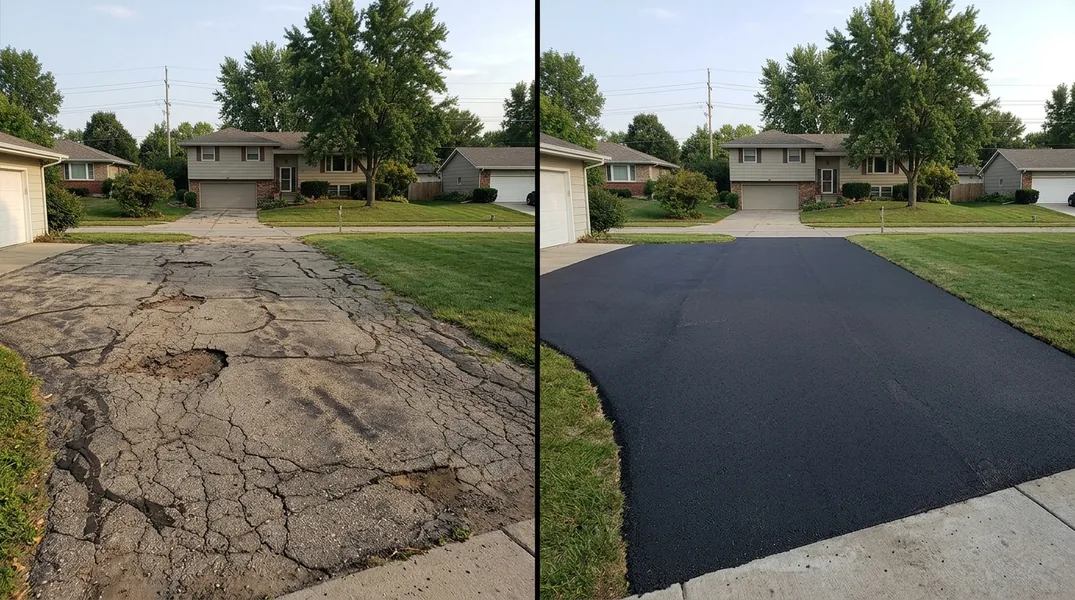
Understanding Asphalt Cracks: The First Step to Smart Decisions
Your driveway is one of the hardest working surfaces on your property. Day after day, it endures heavy vehicle loads, temperature swings, and moisture exposure. Over time, these stresses show up as cracks, and that's when many homeowners in Lincoln face a critical question: should I repair this, or is it time for a full replacement?
The answer depends on several factors, including the type of crack, how wide it is, how many cracks you have, and the overall age and condition of your asphalt. Not every crack means your driveway is failing. Some cracks are cosmetic concerns, while others signal deeper structural problems that demand immediate attention. Learning to read these signs will help you make the right call and avoid costly mistakes.
Types of Driveway Cracks and What They Mean
Asphalt cracks come in different forms, and each tells a different story about what's happening beneath the surface. Linear cracks are thin lines that run in one direction across your driveway. These are often caused by natural settling or minor stress and can usually be addressed with simple Driveway Repair work. Alligator cracks, on the other hand, create a web-like pattern that resembles the skin of an alligator. This type of cracking typically indicates structural failure and is a red flag that your asphalt is breaking down from below.
Spider cracks radiate outward from a single point, often caused by impact or stress concentration. Transverse cracks run perpendicular to the direction of traffic and often develop due to thermal stress as asphalt expands and contracts with temperature changes. Block cracks form rectangular patterns and usually signal that the asphalt has aged and lost flexibility. Understanding which type you're dealing with will help you determine whether Pothole Repair & Asphalt Patching is sufficient or if Asphalt Resurfacing & Overlay is needed.
Repair vs. Replace: The Size and Severity Rule
A good rule of thumb is to measure the width of your cracks. Hairline cracks under one-eighth inch wide are typically cosmetic and can be sealed as part of routine maintenance. Cracks between one-eighth inch and half an inch are candidates for crack sealing, a preventative measure that stops water from infiltrating the asphalt base. Cracks wider than half an inch suggest more serious underlying issues and may require patching or, in severe cases, resurfacing or full replacement.
The length and pattern of cracks also matter. A few isolated cracks scattered across an otherwise sound driveway can usually be repaired affordably. However, if you're seeing extensive cracking across 30 percent or more of your driveway surface, or if you notice cracks returning shortly after repair, this suggests the asphalt base is deteriorating. In these cases, attempting multiple repairs becomes a money pit. A professional assessment from Lincoln Asphalt Paving can help you understand whether repair makes economic sense or if replacement is the smarter long-term investment.
How Long for Asphalt to Cure and What That Means for Your Driveway
One of the most common questions homeowners ask is how long for asphalt to cure. When new asphalt is installed, it doesn't reach full strength immediately. The curing process begins as soon as the hot asphalt is laid, and it continues for weeks or even months. During the first 24 to 48 hours, the asphalt will cool and begin to harden. However, the material is still relatively soft and vulnerable to damage during this period.
How long before you can drive on new asphalt depends on weather conditions and the specific application. In ideal conditions, light foot traffic can resume after 24 hours, but vehicle traffic should wait at least 48 to 72 hours. If temperatures are cool or humid, curing takes longer. Full curing typically takes 6 to 12 months, during which the asphalt continues to harden and compact under the weight of traffic. This extended curing period is why new asphalt driveway care is so important in the weeks and months following installation. Avoiding heavy loads, sharp turns, and excessive heat during this time helps ensure your new surface reaches its maximum lifespan.
New Asphalt Driveway Care: Protecting Your Investment
Once your new asphalt is installed, proper care during the curing phase is critical. Keep heavy vehicles and RVs off the driveway for at least the first week. Avoid parking in the same spot repeatedly, as this concentrates stress and can lead to indentations or soft spots. During hot weather, asphalt can become soft and pliable, so try to minimize traffic during peak heat hours if possible. If you notice small stones or debris on the surface, sweep them away gently rather than allowing them to be pressed into the asphalt by vehicle tires.
One of the most important aspects of new asphalt driveway care is understanding how often to seal driveway surfaces. For new asphalt, most professionals recommend waiting 6 to 12 months before applying the first seal coat. This delay allows the asphalt to fully cure and any excess oils to evaporate. Once you do seal it, plan to reapply seal coating every 2 to 3 years, depending on traffic levels and weather exposure. Seal coating is one of the most cost-effective ways to extend the life of your driveway, protecting the asphalt from UV rays, moisture, and oxidation. In Lincoln, where weather varies significantly between seasons, regular seal coating is especially valuable.
When to Call Lincoln Asphalt Paving for Professional Help
If you're uncertain whether your driveway needs repair or replacement, the best move is to get a professional opinion. Lincoln Asphalt Paving has years of experience assessing driveway conditions and recommending the most cost-effective solutions. Our team can evaluate the extent of cracking, check for base layer problems, and advise whether patching, seal coating, resurfacing, or full replacement is the right path forward.
Don't wait until small problems become big ones. Cracks that seem minor today can widen quickly once water begins seeping into the base layer. This water causes the soil beneath to soften, leading to potholes, further cracking, and accelerated deterioration. A timely repair or preventative seal coat can add years to your driveway's life and save you thousands in the long run. Contact us at (402) 858-2768 or visit our website to request a free estimate. We serve Lincoln and the surrounding areas, and we're ready to help you make the right decision for your driveway.
Looking for a professional asphalt paving contractor in Lincoln? Lincoln Asphalt Paving responds fast for all your asphalt paving needs.
Get a Free Quote